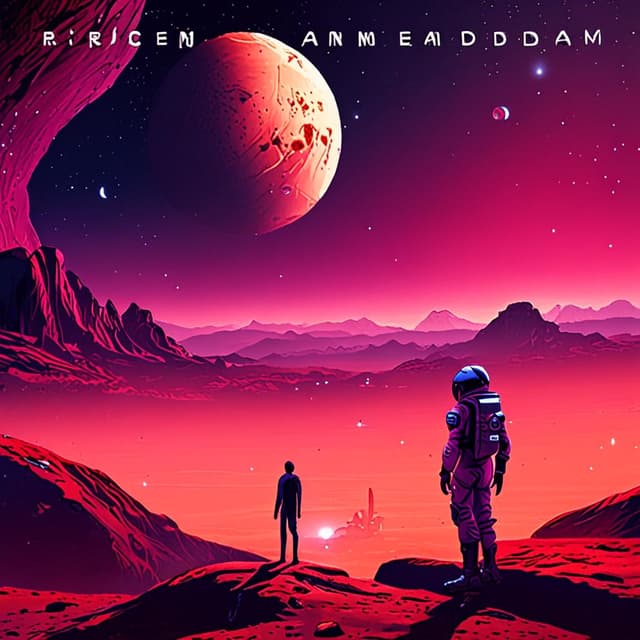
| Plot | An alien colonist is sent to help establish a new outpost on a distant exoplanet in the Andromeda galaxy. They must navigate scientific mysteries, philosophical questions about intelligence and consciousness, and their own personal journey of cultural adaptation while building a sustainable society on the foreign world. |
| Genre | Science fiction • Speculative fiction |
| Theme | Interstellar colonization • Alien civilization • Cultural adaptation • Scientific discovery |
| Title | Return from Andromeda |
| Setting | Distant exoplanet in the Andromeda galaxy |
| Main character | Alien colonist |
"Return from Andromeda" is a science fiction novel by Polish author Stanislaw Lem, set in a future where humanity has established its first permanent colony on an exoplanet in the Andromeda Galaxy. The story follows the experiences of an alien colonist who has been sent to this distant world to help oversee the establishment of a viable, self-sustaining society.
The colony on the Andromeda exoplanet, known as New Terra, represents humanity's most ambitious interstellar endeavor to date. Situated on a world vastly different from Earth, the colony faces a host of challenges in building the necessary infrastructure, harnessing the planet's unique resources, and adapting to the alien ecology.
The protagonist, Syzran, is a member of a highly intelligent alien species that has been recruited by the human settlers to lend their expertise. As Syzran arrives on New Terra, they are immediately struck by the strangeness of the landscape - towering crystalline formations, bizarrely shaped lifeforms, and an atmosphere with unfamiliar chemical compositions.
Syzran's primary task is to work alongside the human colonists to solve the scientific mysteries of their new home and develop sustainable agricultural, energy, and manufacturing systems. However, the planet proves to be more alien and unpredictable than anticipated, with lifeforms and natural phenomena that defy easy categorization or understanding.
As Syzran delves deeper into studying the indigenous biology and geology, they begin to question the very nature of intelligence, consciousness, and what it means to be a sentient being. Interactions with the colony's AI systems and the planet's own strange "consciousness" force Syzran to confront the limitations of their own perceptions and assumptions.
Compounding the scientific challenges are the social and cultural difficulties of establishing a functioning society on an alien world. Syzran must navigate the political tensions, conflicting ideologies, and competing priorities of the diverse human colonists. At the same time, they struggle to adapt their own behaviors, thought patterns, and ways of communicating to this new environment.
Syzran's personal journey of acculturation and self-discovery becomes interwoven with the colony's larger struggle for survival. As a critical event or discovery on the planet threatens the fragile human settlement, Syzran must draw on their scientific insights, philosophical reflections, and newfound understanding of the alien world to help chart a path forward.
Through Syzran's experiences, "Return from Andromeda" explores profound questions about the diversity of intelligent life, the challenges of interstellar colonization, and humanity's place within the larger cosmos. The novel blends hard science fiction elements with deep philosophical ruminations, challenging readers to reconsider their assumptions about the nature of consciousness, intelligence, and the boundaries of what it means to be alive.
Lem's masterful storytelling and scientific imagination have crafted a thought-provoking tale that serves as a departure point for discussions about the future of space exploration, the ethical considerations of interstellar colonization, and the vast, mysterious expanse of the universe beyond our own planet.
